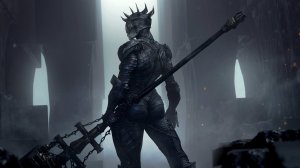
The souls-like genre has become increasingly crowded since FromSoftware’s Dark Souls franchise revolutionized action RPGs over a decade ago. From indie darlings to triple-A productions, countless developers have attempted to capture that lightning in a bottle, with varying degrees of success. Cold Symmetry, the studio behind the original Mortal Shell, has returned with a sequel that doesn’t merely iterate on established formulas—it fundamentally challenges them. Mortal Shell 2 takes the familiar trappings of dark fantasy worlds, punishing combat, and corpse-run mechanics, then systematically deconstructs them to create something that feels genuinely fresh and invigorating in an otherwise derivative landscape.
On the surface, Mortal Shell 2 checks all the expected boxes: gothic architecture looms over medieval landscapes, otherworldly creatures lurk in shadowy corners, and death is a constant companion. The game features beacons—its version of Dark Souls’ iconic bonfires—where players can rest and recover health at the cost of respawning enemies throughout the world. Die in combat, and you’ll drop your accumulated currency, forcing a tense return journey to retrieve it or risk losing everything permanently. These mechanics have become standard fare since Demon’s Souls debuted in 2009, establishing a template that dozens of games have followed religiously. However, Cold Symmetry understands that innovation doesn’t require abandoning familiar elements entirely—it requires transforming them in meaningful ways.
Stamina-Free Combat Transforms The Experience
Perhaps the most immediately striking departure from souls-like conventions is the complete absence of a stamina meter. This seemingly simple change fundamentally alters the rhythm and flow of combat in ways that ripple throughout the entire experience. Players can attack, dodge, and maneuver without watching a depleting bar or waiting for recovery periods. This creates an aggressive, relentless cadence that stands in sharp contrast to the methodical, often defensive approach that defines most games in the genre. Instead of backing away after narrowly avoiding an enemy’s devastating combo, players can immediately launch into their own offensive barrage, maintaining pressure and momentum in ways that traditional souls-likes simply don’t allow.
This design philosophy doesn’t transform Mortal Shell 2 into a mindless hack-and-slash affair, however. The developers have implemented crucial balancing mechanisms that maintain the genre’s signature tension and deliberation. Attack animations cannot be canceled once initiated, meaning every swing of your weapon must be calculated and intentional. Overcommitting with a slow, powerful weapon like the Great Martyr’s Blade or Obsidian Hammer leaves you vulnerable to devastating counterattacks. The original Mortal Shell drew criticism for its often sluggish combat pacing, but this sequel addresses those concerns directly. Combat animations are noticeably snappier while still maintaining a satisfying sense of weight and impact. Every strike feels meaty and consequential, creating visceral satisfaction as you cleave through enemies in showers of crimson.
Diverse Arsenal And The Shell System
The weapon variety on display deserves particular praise. From elegant dual katanas that transform into a devastating axe, to a sweeping scythe with impressive reach, each weapon type offers a distinct playstyle with unique combo possibilities. The game encourages experimentation through light and heavy attack combinations that flow together fluidly, rewarding players who take time to master their chosen armaments. Unfortunately, the upgrade economy somewhat undermines this weapon diversity. By the midpoint of the adventure, while upgrade materials accumulate generously, the currency required for full weapon enhancement remains scarce enough that fully committing to multiple weapons becomes impractical. This forces players to choose their primary weapon early and stick with it, limiting the joy of experimentation that the diverse arsenal otherwise invites.
The titular Mortal Shells represent the game’s most distinctive mechanical innovation. Players control the Harbinger, a faceless, relatively fragile entity with the unique ability to inhabit the bodies of fallen warriors scattered throughout the world. Eight Shells await discovery, each found at their character’s final resting place—one slumped over impaled on a greatsword, another hastily buried in a shallow grave, yet another displayed ceremonially in a mausoleum. Each Shell adheres to a distinct archetype with predetermined statistics that can be upgraded but never fundamentally altered. Eredrim, a heavily armored knight, can shoulder-bash enemies with devastating force while his Executioner ability allows instant kills on weakened foes. Tiel, a nimble thief, turns invisible and strikes from shadows with dagger precision. Sariel operates through a fascinating masochistic risk-reward system involving parasitic thorns and self-inflicted Pain that enhances dodging capabilities when pushed to its limits.
Seals And Tarstones Create Deep Customization
Adding another layer of strategic depth, Mortal Shell 2 introduces Seals—equippable items that contain what would normally be standard souls-like mechanics. Only one Seal can be active at any time, forcing meaningful choices about your defensive approach. The Harden mechanic from the original game, which allowed players to calcify and absorb incoming attacks, now occupies a specific Seal slot. Traditional blocking and parrying exist on another Seal, while a more aggressive option removes blocking entirely but tightens the parry window for greater break damage on perfectly timed deflections. This modular approach to defensive mechanics allows players to truly customize their playstyle rather than having access to every tool simultaneously.
Tarstones provide the final piece of the build-crafting puzzle, unlocking everything from passive buffs to powerful special attacks. These items are discovered through exploration, dungeon completion, and boss victories, offering tangible rewards for thorough investigation of the game’s intricate world. The flexibility here is remarkable—players can stack critical damage bonuses, increase critical hit probability, or guarantee critical strikes at regular intervals. This system creates genuine differentiation between builds that goes far beyond the traditional strength-versus-dexterity dichotomy that dominates the genre. Combined with Shell abilities, weapon selection, and Seal choices, Mortal Shell 2 offers surprising depth in character development that rewards experimentation and planning.
A Challenging But Fair Adventure With Caveats
Despite the numerous tools available to players, Mortal Shell 2 maintains respectable difficulty throughout most of its runtime. The game occupies that coveted sweet spot where deaths typically feel deserved rather than cheap, offering clear pathways to improvement through both player skill development and character progression. The developers have included thoughtful difficulty modifiers: one Seal makes the game easier at the cost of disabling achievements, while another item increases challenge while unlocking otherwise inaccessible areas. This approach fits the genre’s philosophy better than binary difficulty selections, though disabling achievements for using accessibility options feels unnecessarily punitive given that many contemporaries refuse to offer easier alternatives at all.
However, some frustrations persist throughout the experience. The game’s open world is suspended dramatically in the air, creating numerous opportunities for fatal falls—often too many. Attacks that knock players backward can send them tumbling off unexpected ledges, and dying more frequently to gravity than to the game’s actual bosses becomes a recurring irritation. Boss design, while generally competent for main encounters, can feel oversimplified for mini-bosses, particularly when combined with the generous base parry window that makes telegraphed attack patterns trivial to counter. These issues don’t undermine the overall experience but represent areas where refinement would significantly improve an already strong foundation.
The open world itself, despite its cliff-related dangers, proves fascinating to explore. While not approaching Elden Ring’s vast scale, the densely packed environments feel like interconnected levels from a more linear game, each with multiple entry and exit points that reward spatial awareness. Visual design ranges from derivative castles and murky swamps to genuinely striking locations—an abbey rendered almost monochrome except for vivid red leaves wrapped around cold stone, caves decorated with unsettling carved human teeth, once-picturesque villages now overrun with rabid cultists. Mortal Shell 2 constantly surprises with its mechanical innovations, visual flourishes, and the satisfaction of crafting a build uniquely your own. Some balance issues and design frustrations occasionally interrupt the flow, but they’re ultimately overshadowed by unmistakable strengths that mark Cold Symmetry’s sequel as a meaningful evolution of the souls-like formula.
Expert Opinion: Mortal Shell 2 represents an important evolution in the souls-like genre, demonstrating that innovation doesn’t require completely abandoning established conventions. Cold Symmetry’s willingness to challenge fundamental mechanics like stamina management while introducing modular systems like Seals suggests a maturing genre ready to experiment beyond FromSoftware’s template. If these design philosophies continue to develop and inspire other studios, we may see the souls-like genre enter a new era of meaningful variation rather than simple imitation.