When players launch Game Freak’s ambitious new action RPG, Beast of Reincarnation, they’re immediately greeted with an unusual prompt: would you like to play in cinematic mode? This option locks cutscene frame rates to 24 frames per second—the traditional cinema standard—while leaving gameplay untouched. For longtime observers of Game Freak, the studio behind the phenomenally successful Pokémon franchise, this feels like a bold declaration of intent. Pokémon, despite its cultural dominance and multigenerational appeal, has never been described as cinematic. Unfortunately, despite this ambitious framing, Beast of Reincarnation struggles to deliver on its cinematic promises. While the game features spectacular combat sequences and a genuinely fascinating world, flat character performances, robotic animations, bland environments, and an overall lack of polish consistently undermine what could have been a breakthrough title for the studio venturing beyond its comfort zone.
Key Takeaways
- The 24fps ‘cinematic mode’ option signals Game Freak’s ambition beyond Pokémon, but flat writing and static animations undercut the execution
- Combat mechanics emphasizing parries and stagger meters provide satisfying challenge comparable to Sekiro-lite experiences
- Emma’s silent dog companion Koo outshines every human character in conveying personality through animation alone
- Semi-open regions of post-apocalyptic Japan feature memorable art direction but suffer from underutilized exploration space
- The biopunk-meets-solarpunk premise set in 4026 Japan creates a distinct world despite derivative sci-fi elements
The game transports players to the year 4026, exactly two millennia into our future. Civilization has been devastated by a catastrophic phenomenon known as The Blight—a mysterious infection that causes both humans and animals to sprout uncontrollable vegetation from their bodies. In a desperate attempt to survive, humanity transferred their consciousness into mechanical bodies called golems, effectively conquering death itself. However, this solution proved temporary, as the relocated souls eventually deteriorated, leaving behind corrupted, hostile machines. The wildlife fared even worse, with infected creatures called Malefacts now roaming the ruins of Japan, attacking anything in their path. This premise weaves together multiple science-fiction subgenres—biopunk creature designs, cyberpunk transhumanism, and solarpunk aesthetics—creating a world that feels genuinely distinct despite its many inspirations.
Striking Art Direction Clashes With Barren Open Spaces
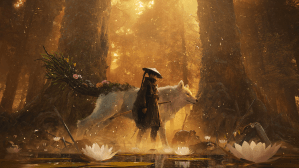
The art direction in Beast of Reincarnation deserves particular praise. The juxtaposition of futuristic technology against the overgrown ruins of Japan creates memorable vistas that reflect the world’s complex history. Emma, the game’s stoic protagonist, embodies this fusion of technology and nature through her striking character design. Her angular, monochrome outfit is punctuated by a flower-adorned braid that grows longer as she becomes more powerful—a subtle but effective visual representation of player progression. This attention to detail in character design demonstrates the care that went into the game’s visual identity, making it all the more disappointing when the environments fail to match this quality.
The game’s structure follows Emma and her loyal canine companion Koo as they travel across Japan toward the capital, hunting the titular Beast of Reincarnation. Each region requires players to defeat a Nushi—powerful Malefacts that spread The Blight. However, these semi-open areas begin to feel repetitive after the initial novelty wears off. Most consist of open fields with tall green grass, eventually giving way to dry deserts as players approach the capital. While there are interesting hidden areas and optional enemies to discover, much of the map space feels underutilized. This represents a common challenge in open-world game design, where developers must balance exploration rewards against development resources. Games like The Legend of Zelda: Breath of the Wild succeeded partly because every corner of their world offered discovery; Beast of Reincarnation struggles to match this standard.
Wooden Dialogue and Stiff Performances Sink the Cast
| Feature | Beast of Reincarnation | Sekiro: Shadows Die Twice |
|---|---|---|
| Core Mechanic | Parry-focused with stagger meter | Deflection and posture system |
| Difficulty | Moderate challenge | High difficulty |
| Companion System | Koo assists in combat | Solo protagonist |
| Instant-Kill Attacks | Available on staggered enemies | Deathblow on broken posture |
Perhaps the most significant failing of Beast of Reincarnation lies in its character work. Emma, as a “vessel” who can absorb power from defeated enemies, is intentionally designed to be emotionally distant. While there are lore justifications for her languid disposition, this doesn’t prevent her interactions from falling flat. In one particularly awkward scene, Emma robotically asks a traveling companion about the nature of love, receiving an equally dry explanation. These moments are exacerbated by deadpan voice performances, static character animations, and editing that leaves uncomfortable silences between dialogue exchanges. While the Japanese voice track offers slightly better delivery, no performance can escape the fundamentally dull writing that permeates the script.
The problems extend beyond Emma to the entire supporting cast. Kagura, a young girl Emma rescues early in the story, manages the player’s mobile base of operations—a vehicle called a Cleanse Walker. Despite her important role, Kagura proves just as personality-deficient as Emma, making their shared conversations about food and journal entries painful to witness. The lack of subtext and nuance in the writing becomes increasingly apparent during these downtime sequences. The camera work lacks creative direction, and characters are perpetually confined to the gray, lifeless walls of the Cleanse Walker. For a game marketing itself on cinematic ambitions, these dialogue scenes represent a fundamental failure to understand what makes cinema engaging—dynamic staging, meaningful pauses, and emotional authenticity.
Ironically, the game’s most compelling character never speaks a word. Koo, Emma’s canine companion, manages to convey more personality through barks, whimpers, and animations than any human character achieves through dialogue. One moment he’s gazing adoringly up at Emma; the next, he’s viciously tearing apart enemy golems. He even collects items for the player, making him both endearing and mechanically useful. However, even Koo cannot escape the game’s character development issues. Despite backstory revelations throughout the narrative, Emma and Koo’s relationship never meaningfully evolves. Emma seems largely disinterested in her companion for most of the journey, and when another character suggests she do something nice for Koo, her best suggestion is simply to pet him. These missed opportunities for emotional resonance represent one of the game’s greatest shortcomings.
Parry-Focused Combat Delivers Genuine Thrills
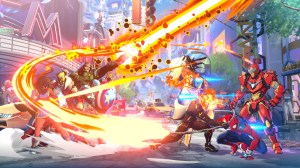
If anything in Beast of Reincarnation deserves the “cinematic” label, it’s the combat system. The parry-focused skirmishes deliver genuine thrills, with enemies proving deadly and aggressive enough to cut Emma down in just a few hits. While not reaching the punishing difficulty of FromSoftware’s Sekiro: Shadows Die Twice or Neowiz’s Lies of P, Beast of Reincarnation presents a satisfying challenge—especially for players who fail to utilize Emma and Koo’s full ability sets. The fundamentals feel excellent: Emma’s sword slashes carry weight, successful parries produce satisfying audio feedback, and finishing moves deliver appropriately visceral impact. Like Sekiro, enemies possess both health bars and stagger meters, with deflections and sustained pressure filling the latter until Emma can execute an instant-kill attack on standard foes.
Beyond basic attacks, Emma unlocks skills that can be deployed mid-combo for spectacular effects. These abilities are themed around different blossoms, and successful execution causes massive flowers to bloom across the battlefield—a visual flourish that reinforces the game’s nature-technology fusion. These combo attacks deal significantly more damage than standard slashes but require windup time that leaves Emma vulnerable. This creates an engaging risk-reward dynamic that encourages players to study enemy attack patterns and identify openings. As players progress, combat becomes increasingly spectacular, with trees and flowers springing up around Emma as she dispatches foes with style.
What truly distinguishes Beast of Reincarnation’s combat from similar action games is the command system for Koo. Pressing the appropriate button freezes time, allowing players to issue commands that cost FP—a resource accumulated through successful parries. Efficiently defeating tougher enemies requires aggressive play with Emma while simultaneously managing Koo’s abilities. Some commands synergize beautifully with Emma’s skills; for example, Koo can bind or stun enemies briefly, creating windows for Emma’s more powerful combo attacks. This dual-character management adds strategic depth that elevates encounters beyond simple reaction tests.
Boss Encounters Shine Despite Repetitive Structure
The constant stream of new combos, abilities, commands, and weapons keeps combat fresh throughout the approximately 25-hour campaign. The progression system, while potentially overwhelming as Emma and Koo’s skill trees expand, offers genuine build diversity. Different skill branches support distinct playstyles, and experimentation with ability combinations proves rewarding. Some players might invest heavily in Emma’s Sakura Blade Art—one of the longest combos available—while prioritizing Koo’s binding commands to create execution windows. Others might focus on shorter-windup abilities like the Kiku Blade Art, emphasizing Koo’s attack chains instead. This flexibility ensures combat remains engaging even as players develop personal preferences.
Boss encounters, called Nushi fights, represent the combat system’s highest achievements. These towering Malefacts, based on real-world animals transformed by The Blight, are both beautiful and terrifying. Root tendrils and giant flowers sprout from their bodies, creating memorable visual designs that complement challenging mechanical encounters. Most bosses feature two phases, pushing players to conserve resources while fully utilizing both characters’ ability sets. The back-and-forth rhythm of reacting to attacks while applying pressure during openings creates genuinely engaging experiences. However, these high points are somewhat diminished by the game’s tendency to reuse bosses in the second half. While reencountered Nushi appear at higher levels, their attack patterns remain nearly identical, robbing later fights of tension and reducing opportunities for the experimentation that makes earlier encounters compelling.
Despite its strengths, the combat system lacks the polish of its apparent inspirations. Camera behavior becomes problematic against large bosses, making it difficult to track incoming attacks when positioned beneath massive enemies. Perfect dodge timing feels inconsistent, sometimes triggering the slow-motion counterattack window too early or failing to register properly timed inputs. Emma’s traversal abilities—using her root-like hair to reach elevated positions or cross gaps—can be incorporated into combat for aerial combos, but these mechanics don’t always function reliably. Sometimes her hair won’t extend fully; other times, grapple points won’t register properly. These issues are individually minor but accumulate into a general sense of messiness that undermines the combat’s considerable strengths.
Switch Performance and Platform Trade-Offs
Beast of Reincarnation’s technical performance varies significantly across platforms, adding another layer of concern for potential players. Testing on a PC equipped with an RTX 4080 revealed micro-stutters and hitches at both 1080p and 1440p resolutions. Curiously, resolution settings above these options weren’t accessible without enabling a full-screen mode that appeared unavailable in the review build. Based on extensive testing, the PlayStation 5 and PlayStation 5 Pro appear to offer the best experience, while the Xbox Series X suffers from severe frame rate issues that Game Freak has acknowledged and committed to addressing before release. These platform disparities represent important considerations for consumers choosing where to play.
The visual bugs and performance inconsistencies reflect broader polish issues that affect multiple aspects of the experience. For a studio attempting to establish cinematic credentials, these technical shortcomings prove particularly damaging. Cinema relies on controlled presentation; frame rate stutters and visual glitches shatter immersion as effectively as flat dialogue or robotic animations. Game Freak’s ambition with Beast of Reincarnation is evident throughout, but the execution consistently falls short of the standards set by the genre’s best examples. Games like Sekiro and Lies of P, while not perfect, deliver polished experiences that support their mechanical and narrative ambitions. Beast of Reincarnation, despite its fascinating world and enjoyable combat core, never achieves this level of cohesion.
Ultimately, Beast of Reincarnation represents an ambitious but overextended effort from Game Freak. The lack of polish undermines genuinely versatile combat, mundane performances suffocate a potentially fascinating narrative, and uninteresting open areas waste strong art direction. However, the game isn’t without merit. When combat clicks—when players chain together combos while coordinating Koo’s commands and deflecting ferocious attacks—Beast of Reincarnation delivers genuine thrills. The core gameplay loop, despite its rough edges, sustained engagement across a substantial campaign. But everything surrounding that core—the story delivery, the exploration, the technical presentation—fails to meet the standards the game’s marketing suggests. For players seeking parry-focused action games, superior alternatives exist. For those curious about Game Freak’s expansion beyond Pokémon, Beast of Reincarnation offers glimpses of potential that, unfortunately, remain largely unrealized.
What This Means for Game Freak's Future
Beast of Reincarnation represents Game Freak’s most ambitious departure from the Pokémon formula, and the results are decidedly mixed. The studio clearly understands how to craft satisfying moment-to-moment action—the parry system and enemy aggression suggest genuine mechanical competence. However, the narrative ambitions that prompted a literal ‘cinematic mode’ toggle expose fundamental gaps in the studio’s storytelling capabilities.
The real question is whether Game Freak views this as a learning experience or a finished product. The worldbuilding shows imagination, combining biopunk aesthetics with post-human philosophy in ways that feel fresh. But cinema requires more than pretty frames—it demands performances, pacing, and emotional stakes. Static character models delivering monotone dialogue in gray interiors is the opposite of cinematic craft.
For players, this becomes a value proposition question. Those seeking challenging action RPG combat with a unique visual identity may find enough here to justify engagement. Anyone hoping for narrative depth or memorable characters should temper expectations significantly. Game Freak has proven it can build compelling worlds; it has not yet proven it can populate them with people worth caring about.
Common Questions About Beast of Reincarnation
Is Beast of Reincarnation harder than Sekiro?
No. While it shares parry-focused mechanics and stagger meters with FromSoftware’s title, Beast of Reincarnation presents a more moderate challenge. Enemies are aggressive and can kill Emma quickly, but the overall difficulty sits below Sekiro and Lies of P.
What does the cinematic mode actually do?
Cinematic mode locks cutscene frame rates to 24fps, matching traditional film standards, while leaving gameplay frame rates untouched. It’s an aesthetic choice rather than a performance setting.
Can you play Beast of Reincarnation in English?
Yes, the game includes English voice acting, though the review notes the Japanese voice track offers slightly better delivery. Neither can fully compensate for the writing quality issues.
Expert Opinion: Beast of Reincarnation represents a fascinating case study in studio evolution, demonstrating both the opportunities and risks when established developers venture outside their comfort zones. While Game Freak’s ambition to create a cinematic action experience is commendable, their inexperience with the genre’s technical and narrative demands is evident throughout. Future projects in this direction will need significantly more development polish and, crucially, stronger writing talent to compete with genre leaders like FromSoftware and PlatinumGames.