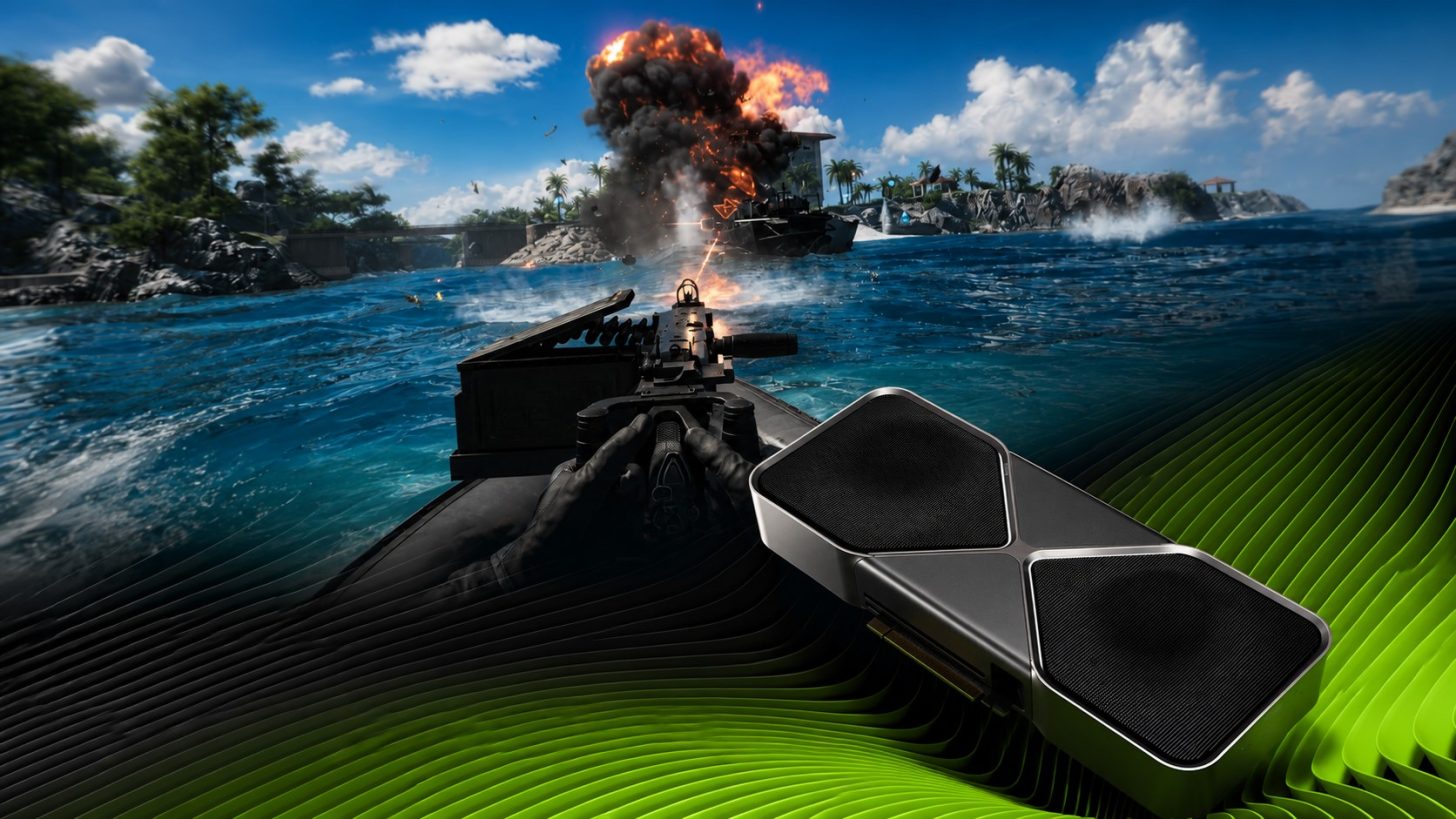
Battlefield Studios has officially rolled out a crucial update designed to address persistent driver crash issues that have been plaguing NVIDIA GPU owners since the game’s launch. Game Update 1.4.1.5 specifically targets the frustrating crashes experienced by players using NVIDIA’s latest RTX 50 series graphics cards, with developers revealing that one of the unexpected culprits behind the technical problems was actually a weapon attachment within the game itself. This revelation has surprised many in the gaming community, as software crashes are typically attributed to driver incompatibilities or hardware issues rather than in-game cosmetic or functional elements.
The Technical Issues That Plagued RTX 50 Series Users
For several weeks, Battlefield 6 players who invested in NVIDIA’s cutting-edge RTX 50 series graphics cards found themselves unable to enjoy the game without experiencing frequent and disruptive driver crashes. The problems were particularly pronounced on certain maps, with Tsuru Reef being identified as one of the primary locations where crashes occurred most frequently. The issue was severe enough that Battlefield Studios took the unusual step of recommending that affected players downgrade their NVIDIA drivers to version 596.49, an older release that predated some of the problematic interactions between the game and newer GPU architectures.
The RTX 50 series, which represents NVIDIA’s latest generation of consumer graphics cards built on advanced architecture, was expected to deliver unprecedented performance in modern titles like Battlefield 6. However, the driver crashes created a paradoxical situation where owners of the most powerful consumer GPUs available were forced to either avoid certain game content or revert to outdated driver software, potentially sacrificing performance and stability in other applications. This situation highlighted the complex challenges that game developers face when optimizing their titles for cutting-edge hardware that may have been released after initial development phases were completed.
Weapon Attachment Identified As Unexpected Crash Cause
Perhaps the most surprising aspect of this technical saga was the discovery that a weapon attachment was among the factors contributing to the driver crashes. In modern game development, weapon attachments are typically considered relatively simple assets that modify gameplay statistics and visual appearances without significantly impacting system stability. The fact that such an element could interact with GPU drivers in a way that causes system-level crashes speaks to the incredible complexity of modern game engines and the intricate ways in which game assets, rendering pipelines, and hardware drivers must work together seamlessly.
Game developers and graphics engineers have long understood that certain rendering techniques, shader programs, or texture loading operations can stress GPU drivers in unexpected ways. However, the connection between a specific weapon attachment and widespread driver failures suggests that the problematic asset may have triggered an edge case in NVIDIA’s driver code when combined with the particular rendering demands of maps like Tsuru Reef. This type of bug is notoriously difficult to identify and reproduce, requiring extensive collaboration between game studios and hardware manufacturers to diagnose and resolve.
The Broader Context Of GPU Compatibility Challenges
The Battlefield 6 crash issue is part of a broader pattern of challenges that emerge whenever new GPU generations launch alongside demanding AAA titles. NVIDIA’s RTX 50 series cards introduce new hardware features and architectural changes that require both driver teams and game developers to update their code accordingly. The Battlefield franchise, known for its large-scale multiplayer battles featuring destructible environments and advanced visual effects, places exceptional demands on graphics hardware, making it particularly susceptible to compatibility issues during transitional periods in GPU technology.
Battlefield Studios acknowledged the problem promptly and worked to deliver a fix, demonstrating the importance of ongoing post-launch support for modern games. The gaming industry has increasingly moved toward a service-based model where titles receive continuous updates and improvements long after their initial release. This approach allows developers to address unforeseen technical issues, balance gameplay elements, and add new content, but it also requires robust communication channels between studios and their player communities to identify and prioritize problems effectively. With Update 1.4.1.5 now available, RTX 50 series owners can finally experience Battlefield 6 as intended, without the frustration of unexpected crashes interrupting their gameplay sessions.
Expert Opinion: This incident underscores the growing complexity of PC gaming optimization, where even minor in-game assets can create cascading failures across sophisticated hardware-software stacks. As GPU architectures become increasingly advanced, we can expect closer collaboration between game studios and hardware manufacturers to become standard practice, with pre-release testing periods potentially extending to accommodate new GPU launches. Players should anticipate similar transitional challenges with future hardware generations, though studios that maintain responsive patching cycles will continue to earn community trust.