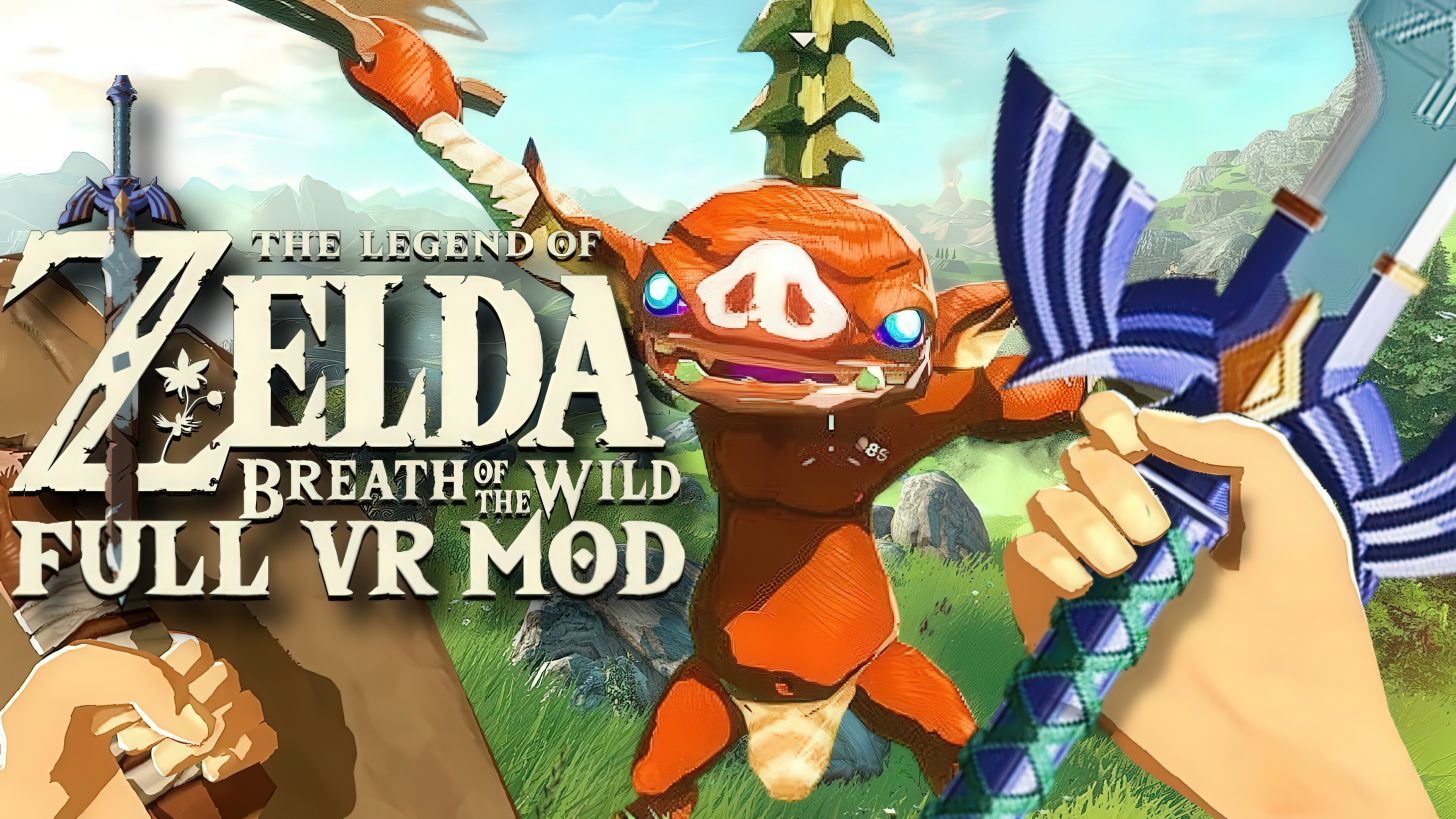
The modding community continues to push the boundaries of what’s possible with Nintendo’s beloved titles, and the latest milestone comes from dedicated modder Crementif, who has released a significant update to the BetterVR mod. This ambitious project transforms The Legend of Zelda: Breath of the Wild into a fully immersive virtual reality experience, representing thousands of hours of painstaking reverse-engineering work on Nintendo’s proprietary game engine. The mod runs on the Cemu emulator and has been in active development for approximately seven months, with the creator already teasing an even more ambitious project: bringing Mario Kart 8 to virtual reality.
Since its initial release, BetterVR has received an impressive 20 substantial updates, each bringing meaningful improvements, bug fixes, and polish to the VR experience. This dedication to continuous improvement demonstrates the level of commitment required to transform a traditional gaming experience into something that feels native to virtual reality hardware. The modder has indicated that development is far from complete, with numerous additional features still planned for future releases.
The Technical Challenge of VR Conversion
Converting a game like Breath of the Wild into VR is no simple task. The original game was designed for traditional displays, meaning everything from the user interface to the camera system needed to be completely reimagined for immersive headsets. This process requires deep understanding of how the game’s engine processes graphics, handles player input, and manages the virtual camera—knowledge that can only be obtained through extensive reverse-engineering efforts. The modder had to essentially decode Nintendo’s proprietary technology without access to source code or official documentation.
Breath of the Wild, released in 2017 alongside the Nintendo Switch, became one of the most critically acclaimed games in history, winning numerous Game of the Year awards and redefining open-world game design. The game already featured a basic VR mode through Nintendo Labo VR support, but this implementation was widely considered limited and uncomfortable for extended play sessions. BetterVR aims to deliver the definitive virtual reality experience that fans have long desired, implementing features like proper motion controls, comfortable camera handling, and optimized rendering for VR displays.
Features and Future Development
The BetterVR mod includes an extensive feature set that transforms nearly every aspect of the gameplay experience. Players can expect full motion controller support, allowing them to aim bows, swing weapons, and interact with the world using natural hand movements. The mod also addresses common VR comfort issues through various locomotion options and camera smoothing techniques designed to minimize motion sickness—a crucial consideration for any VR implementation.
Perhaps most exciting for Nintendo fans is Crementif’s announcement that Mario Kart 8 may be the next title to receive the VR treatment. Racing games are particularly well-suited for virtual reality, as the seated cockpit perspective naturally aligns with how players typically use VR headsets. If successful, this could open the door for an entirely new way to experience Nintendo’s beloved racing franchise, complete with the immersion of actually sitting inside a kart on Rainbow Road.
The Broader Emulation and Modding Landscape
This development highlights the ongoing tension between game preservation efforts and intellectual property concerns. Emulators like Cemu exist in a legal gray area, as the software itself is generally legal while downloading game ROMs without owning the original title is not. Nintendo has historically taken an aggressive stance against emulation projects, though community-driven preservation efforts continue to thrive. Mods like BetterVR demonstrate how passionate communities can extend the lifespan and accessibility of classic games in ways that official releases often cannot match.
The VR gaming market continues to grow, with headsets from Meta, Sony, and various PC manufacturers becoming increasingly affordable and capable. Yet major publishers have been slow to embrace the platform with their flagship franchises. This gap between consumer demand and official support creates opportunities for skilled modders to fill the void, bringing beloved games to new platforms and formats. As VR technology continues to mature, projects like BetterVR serve as proof of concept for what official implementations could eventually deliver.
Expert Opinion: The success of BetterVR demonstrates that there is substantial untapped demand for VR versions of beloved Nintendo titles—demand that Nintendo itself has largely ignored. While the company is unlikely to officially support such projects, the technical achievements here could influence future game design decisions across the industry. As VR headsets become more mainstream, we may see major publishers finally invest in proper VR conversions of their flagship franchises, potentially using insights gained from community projects like this one.