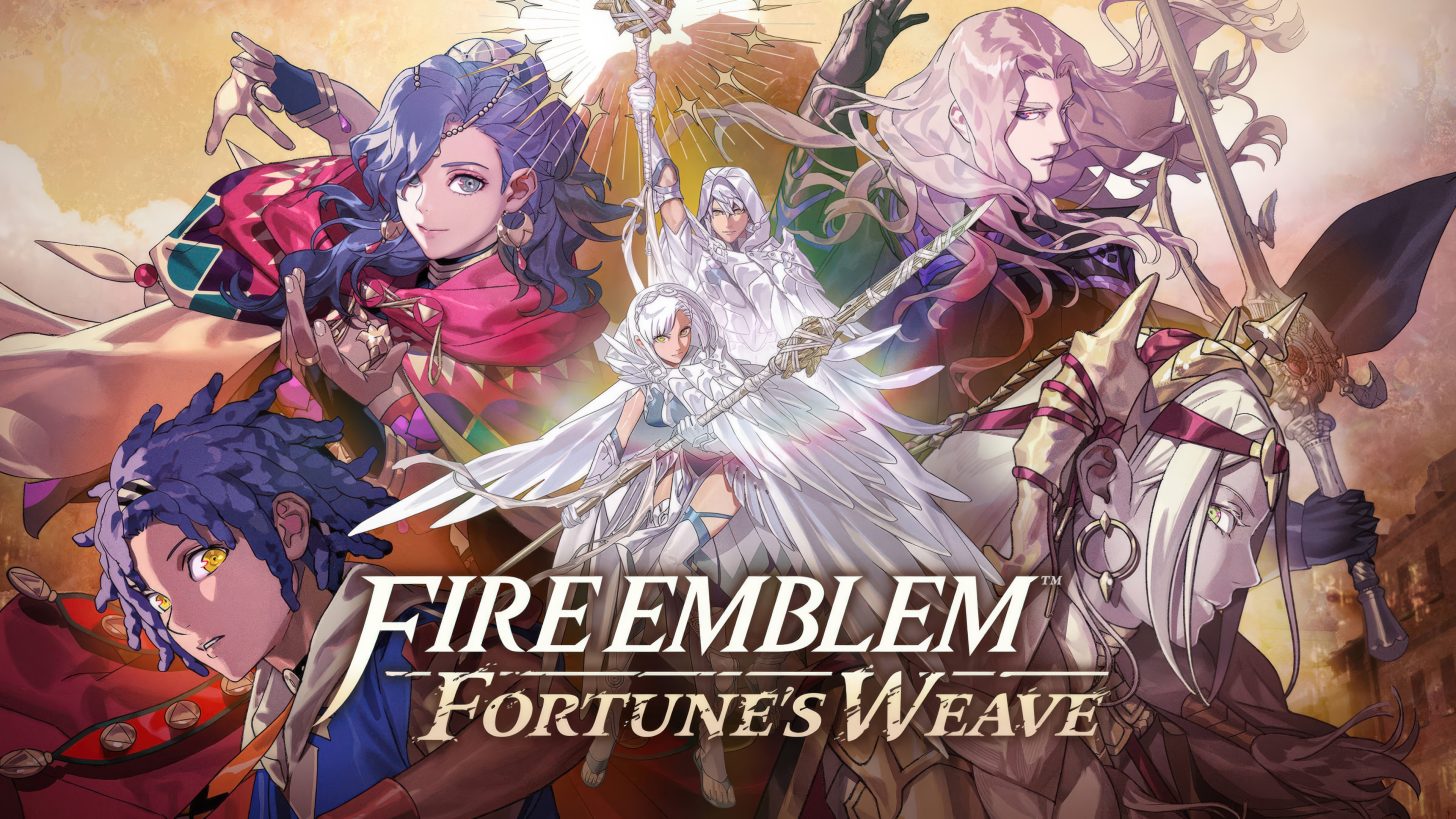
Nintendo and Intelligent Systems have officially unveiled Fire Emblem: Fortune’s Weave, marking the next mainline installment in the beloved tactical role-playing game series. First revealed as a Nintendo Switch 2 exclusive in September 2025, this ambitious new entry represents a significant evolution for the franchise, introducing innovative time-travel mechanics while maintaining the strategic depth that has defined Fire Emblem for over three decades. The game promises to deliver an epic narrative set within the divine Dagdan Empire, where players will navigate a complex web of political intrigue, ancient prophecies, and the looming threat of a resurrected demon god named Balor.
The announcement has generated tremendous excitement among fans who have eagerly awaited news of the next chapter following 2023’s Fire Emblem Engage, which received generally positive reviews for its refined combat system and nostalgic callbacks to previous entries. Fortune’s Weave appears to be taking a bold new direction, building its entire campaign structure around four distinct protagonists whose individual story paths can be explored separately and revisited through the game’s central time-manipulation mechanics. This approach suggests a level of narrative ambition unprecedented in the series’ history, potentially offering hundreds of hours of strategic gameplay and storytelling.
A New World and Ancient Threats
Fire Emblem: Fortune’s Weave transports players to the Dagdan Empire, a realm steeped in divine authority and ancient mysticism. At the heart of the narrative lies a grand contest that promises to grant a single wish to its ultimate victor—a premise that immediately draws warriors, nobles, and opportunists from across the empire into deadly competition. However, this seemingly straightforward tournament quickly becomes entangled with a far greater threat: the revival of Balor, a demon god whose return threatens to plunge the entire world into chaos and destruction.
The Fire Emblem series has a rich tradition of incorporating mythological elements from various cultures, and Balor appears to draw inspiration from Celtic mythology, where Balor of the Evil Eye was a powerful figure in Irish legend. This cultural influence could suggest broader world-building elements that incorporate Celtic and European folklore, potentially creating one of the most distinctive settings in Fire Emblem history. The Dagdan Empire itself appears to represent a sophisticated civilization where divine and mortal authority intersect, creating fertile ground for the political machinations and personal dramas that have always been central to Fire Emblem storytelling.
Revolutionary Time-Travel Mechanics and Multi-Protagonist Structure
Perhaps the most groundbreaking feature announced for Fortune’s Weave is its implementation of time-travel mechanics woven directly into the gameplay experience. Unlike previous Fire Emblem titles that followed more linear narrative structures, this new entry allows players to experience the unfolding crisis from four different perspectives, with the ability to jump between timelines and revisit crucial moments in history. This design philosophy appears to build upon concepts explored in Fire Emblem: Three Houses, which offered three distinct story routes, but expands them significantly with temporal manipulation elements.
The four-protagonist system represents a substantial evolution in how Fire Emblem tells its stories. Each character presumably offers unique abilities, relationships, and perspectives on the central conflict, encouraging multiple playthroughs while potentially allowing players to piece together a more complete understanding of the Dagdan Empire’s history and the true nature of Balor’s threat. Industry analysts suggest this approach could dramatically increase the game’s replay value while appealing to players who appreciate complex, multi-layered narratives that reward careful attention and exploration.
Classic Strategy Refined for Next-Generation Hardware
While Fortune’s Weave introduces numerous innovations, the development team has confirmed that the game preserves the series’ trademark grid-based, turn-based tactical combat that has defined Fire Emblem since its 1990 debut on the Famicom. Players will continue to command armies across strategic battlefields, managing unit positioning, weapon advantages, and the permadeath system that has become synonymous with the franchise’s challenging gameplay. The Switch 2’s enhanced hardware capabilities should allow for more detailed unit models, larger battlefield scales, and improved visual effects that bring combat to life like never before.
Additionally, Fortune’s Weave reportedly incorporates city-building or management elements, suggesting players will have opportunities to develop and customize their base of operations between missions. This feature echoes similar systems from Fire Emblem: Three Houses’ Garreg Mach Monastery and Fire Emblem Fates’ My Castle, but appears poised to offer deeper integration with the main gameplay loop. Such systems have proven popular among fans for providing meaningful downtime activities while fostering stronger connections with recruited characters through support conversations and relationship building.
Looking Ahead to a New Era
Fire Emblem: Fortune’s Weave represents more than just another sequel—it signals Nintendo’s confidence in the franchise as a flagship title for their new hardware platform. The Fire Emblem series has experienced remarkable growth since Fire Emblem Awakening revitalized the brand in 2012, transforming from a niche tactical series into one of Nintendo’s most valuable intellectual properties. With Fortune’s Weave, Intelligent Systems appears ready to push boundaries once again, delivering an experience that honors the series’ strategic heritage while embracing bold new ideas that could define tactical RPGs for years to come.
Expert Opinion: Fire Emblem: Fortune’s Weave’s ambitious multi-protagonist structure combined with time-travel mechanics represents a significant risk for Intelligent Systems, but one that could pay enormous dividends if executed properly. The success of branching narratives in Three Houses demonstrated player appetite for complex storytelling, and Fortune’s Weave appears poised to elevate this concept further. Industry observers should watch closely to see whether this title establishes a new template for narrative-driven strategy games on next-generation platforms.