
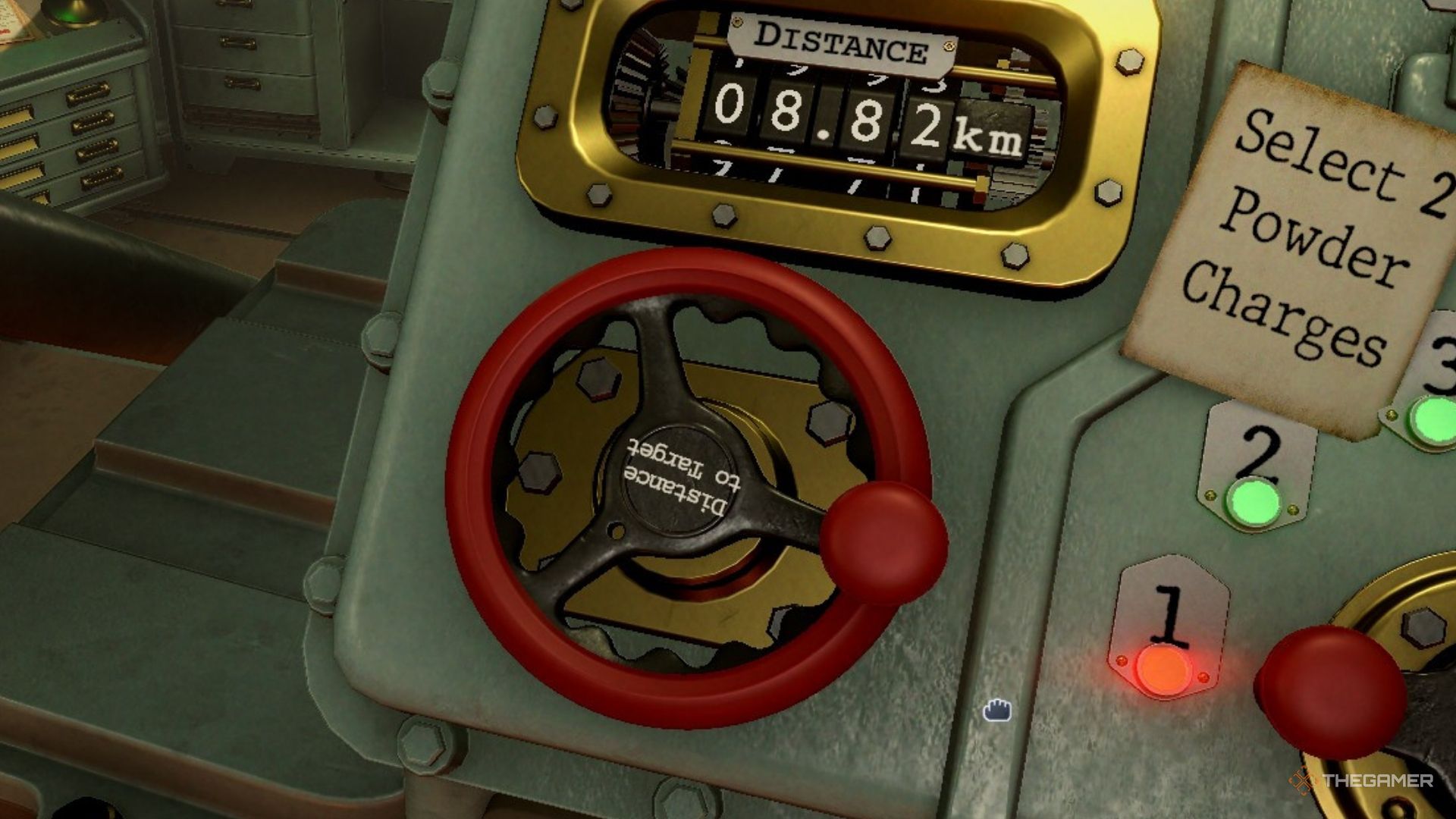
Operating a 5,000-ton artillery spider sounds like exactly the sort of job that should come with an extensive training course, and thankfully, Iron Nest: Heavy Turret Simulator delivers precisely that experience. This unique simulation game places players inside a massive walking war machine known as the Iron Nest, where every thunderous blast begins with a surprisingly intricate and hands-on process. Set against the backdrop of an alternate-history 1920s Spain teetering on the edge of civil war, the game offers a deeply immersive experience that combines historical fiction with complex mechanical simulation.
The premise of Iron Nest draws heavily from the dieselpunk aesthetic that has captivated gaming audiences in recent years. This genre reimagines early 20th-century technology through a fantastical lens, envisioning massive mechanical constructs that blend industrial-era engineering with impossible scale. The game’s setting during a fictionalized Spanish conflict adds layers of political tension and urgency to the gameplay, creating a narrative framework that justifies the existence of such extraordinary military hardware. Players find themselves not merely operating a weapon, but participating in a pivotal moment of alternate history.
Understanding The Iron Nest’s Core Systems
The turret operation in Iron Nest is far from a simple point-and-click affair. Players must familiarize themselves with multiple interconnected systems that work together to deliver devastating firepower. The simulation requires operators to manage ammunition loading mechanisms, targeting systems, power distribution, and cooling protocols. Each of these elements demands attention and proper sequencing, creating a gameplay loop that rewards patience and methodical thinking over rapid reflexes.
The ammunition handling system alone represents a significant portion of the operational challenge. Unlike modern automated systems, the Iron Nest’s 1920s-era technology requires manual coordination of shell transport, loading cradles, and breach mechanisms. Players must ensure that the correct ammunition type is selected for the target, that the loading sequence is properly initiated, and that all safety interlocks are engaged before firing. This attention to procedural detail reflects the simulator genre’s commitment to authenticity, even within a fictional technological framework.
Mastering The Firing Sequence
Successfully firing the Iron Nest’s main turret involves a precise sequence of actions that must be executed in the correct order. First, operators must acquire and track their target using the mechanical targeting apparatus, which includes range finders, elevation adjusters, and traverse controls. The game simulates the limitations of period-appropriate technology, meaning that computerized targeting assistance is nonexistent. Players must rely on their own calculations and spatial awareness to ensure accurate fire.
Once the target is acquired, the firing sequence requires coordinating multiple crew stations. Power must be routed to the turret systems, the breach must be confirmed as properly sealed, and the firing mechanism must be armed. Only when all indicator lights show green can the operator pull the firing lever. The game rewards this complexity with spectacular visual and audio feedback, as the massive artillery piece unleashes its payload with screen-shaking intensity. The developers have clearly invested significant effort into making each successful shot feel like an accomplishment earned through skill and attention.
Historical Context And Game Design Philosophy
Iron Nest joins a growing category of simulation games that prioritize procedural complexity over accessibility. Titles like VTOL VR, War Thunder, and various submarine simulators have demonstrated that a dedicated audience exists for experiences that demand genuine learning and mastery. The appeal lies in the satisfaction of understanding and operating complex systems, transforming the player from a confused novice into a competent operator through practice and study.
The choice of 1920s Spain as the setting also reflects thoughtful world-building. The actual Spanish Civil War of 1936-1939 served as a testing ground for military technologies and tactics that would later define World War II. By placing the game in an alternate version of this era, the developers can explore themes of technological warfare and political conflict while maintaining creative freedom regarding the machinery and scenarios presented. This approach allows for imaginative vehicle designs that feel grounded in a recognizable historical context.
Expert Opinion: Iron Nest represents an emerging trend in simulation gaming where complexity itself becomes the primary gameplay mechanic. As virtual reality technology continues to mature and players seek more immersive experiences, we can expect more titles that transform players into operators of fantastical machinery. The success of such games will likely inspire developers to explore other historical periods and alternative technology paths, creating rich new subgenres within the simulation space.