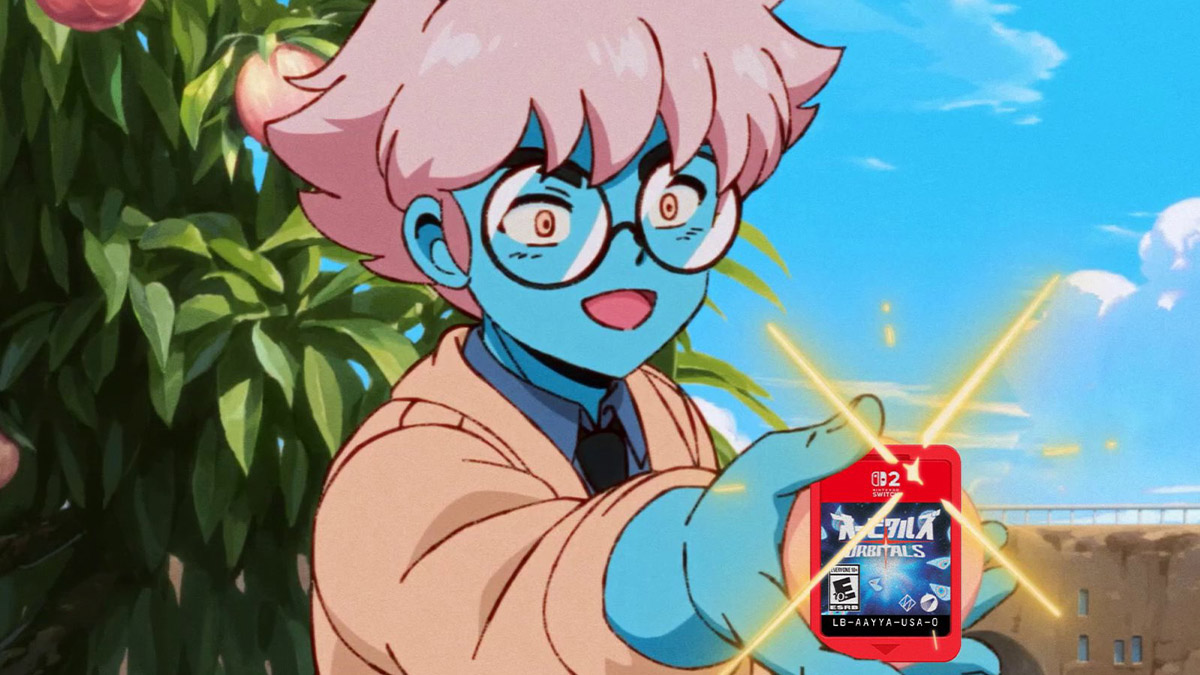
With less than a month remaining until Orbitals launches on Nintendo Switch 2, the creative minds behind the game are speaking out in defense of physical media at a time when the gaming industry seems increasingly determined to abandon it. In an extensive interview, Marcos Ramos, creative director, and Jakob Lundgren, game director at Shapefarm studio, shared their passionate commitment to offering their cooperative title in both digital and physical formats. Their stance comes amid growing controversy over major publishers like Sony reportedly planning to phase out physical game production entirely by 2028, a move that has sparked significant backlash from gaming communities worldwide.
The decision to partner with Nintendo for an exclusive Switch 2 release wasn’t made lightly. According to Lundgren, beyond the geographical convenience of being based in Japan, one of the key factors that drew Shapefarm to Nintendo’s new console was the GameShare feature. This innovative functionality allows players to digitally lend their games to friends, making it an ideal match for Orbitals, which emphasizes cooperative gameplay both locally and online. The feature represents Nintendo’s acknowledgment that game sharing remains an important part of gaming culture, even in an increasingly digital world.
Physical Gaming Under Threat: Industry Shifts and Fan Pushback
The announcement that Orbitals will receive a physical release carries particular significance given the current industry climate. Recent revelations about upcoming titles like GTA 6 shipping with download codes inside retail boxes rather than complete game data have frustrated consumers who value true physical ownership. Combined with reports that PlayStation may completely abandon physical media production by 2028, many gamers feel their preferences are being systematically ignored by major publishers prioritizing digital distribution for its higher profit margins and reduced manufacturing costs.
Despite being an independent studio working with independent publisher Kepler Interactive, Shapefarm found the decision to release physically almost natural. “We were both very much in favor of it,” Lundgren explained during the interview. The public response validated their instincts immediately. “From the moment we announced the game, more than half the comments were asking: ‘Will there be a physical version?'” Ramos noted with evident satisfaction. “We’re delighted to offer this to the fans.” Kepler Interactive has established itself as a publisher that consistently supports physical releases, having previously distributed boxed versions of acclaimed titles from studios like Sloclap, creators of Sifu and the upcoming Rematch, as well as Sandfall Interactive’s Clair Obscur: Expedition 33.
1980s Nostalgia Demands a Tangible Experience
The choice to produce physical copies extends beyond mere business considerations for the Shapefarm team. Orbitals deliberately channels a strong 1980s visual and thematic aesthetic, an era when digital distribution simply didn’t exist. “Thinking back to the 1980s, digital wasn’t a thing,” Lundgren reflected. “As a result, you get the feeling that there should be a physical version of the game.” This philosophical alignment between the game’s nostalgic presentation and its distribution format demonstrates a level of artistic coherence that many modern releases lack. The 1980s represented gaming’s formative years, when cartridges and instruction manuals were inseparable from the experience of playing.
The personal connection both developers maintain with physical media runs deep. While Lundgren admits he’s “not really a collector” by nature, he stated unequivocally that given the choice, he will always purchase a physical copy. He traced this preference back to childhood memories that many gamers of a certain generation will recognize intimately. “It maybe comes from my childhood, when you buy a game, then in the car on the way home, you read the manual and look at the back of the box,” he recalled. “For me, there’s something really pleasant about holding a physical copy of a game in your hands.”
The Irreplaceable Sensation of Ownership
Ramos immediately echoed his colleague’s sentiment, declaring that “holding a game in your hands provides something unmatched.” This emotional connection to physical media transcends gaming entirely. Lundgren drew a parallel to his recent experience with e-readers, having just invested in a Kindle. Despite the convenience of digital reading, he found something fundamentally missing from the experience. “I love picking up a book, holding it, opening it for the first time, smelling it… There’s nothing better than all of that!” he exclaimed. The same principle, he suggested, applies to the anticipation of opening the Orbitals box and inserting its cartridge into a Nintendo Switch 2 when the game launches on September 3rd.
The physical versus digital debate in gaming reflects broader cultural tensions about ownership, preservation, and consumer rights. Digital purchases technically represent licenses that can be revoked, while physical copies provide tangible ownership that survives server shutdowns and corporate decisions. Game preservation advocates have long warned about the fragility of digital-only libraries, citing numerous instances of games becoming permanently unavailable when publishers remove them from online stores. Shapefarm’s commitment to physical distribution represents a small but meaningful stand against this industry trajectory, offering players genuine ownership of their purchase and the simple, timeless pleasure of holding their game in their hands.
Expert Opinion: The growing resistance to all-digital gaming distribution suggests publishers may be moving faster than consumers are willing to follow. With Nintendo continuing to support physical media on Switch 2 and independent studios like Shapefarm championing cartridge releases, the format’s death may be significantly delayed. The industry would be wise to recognize that physical gaming represents not merely nostalgia but a fundamental consumer desire for tangible ownership that digital alternatives cannot replicate.