
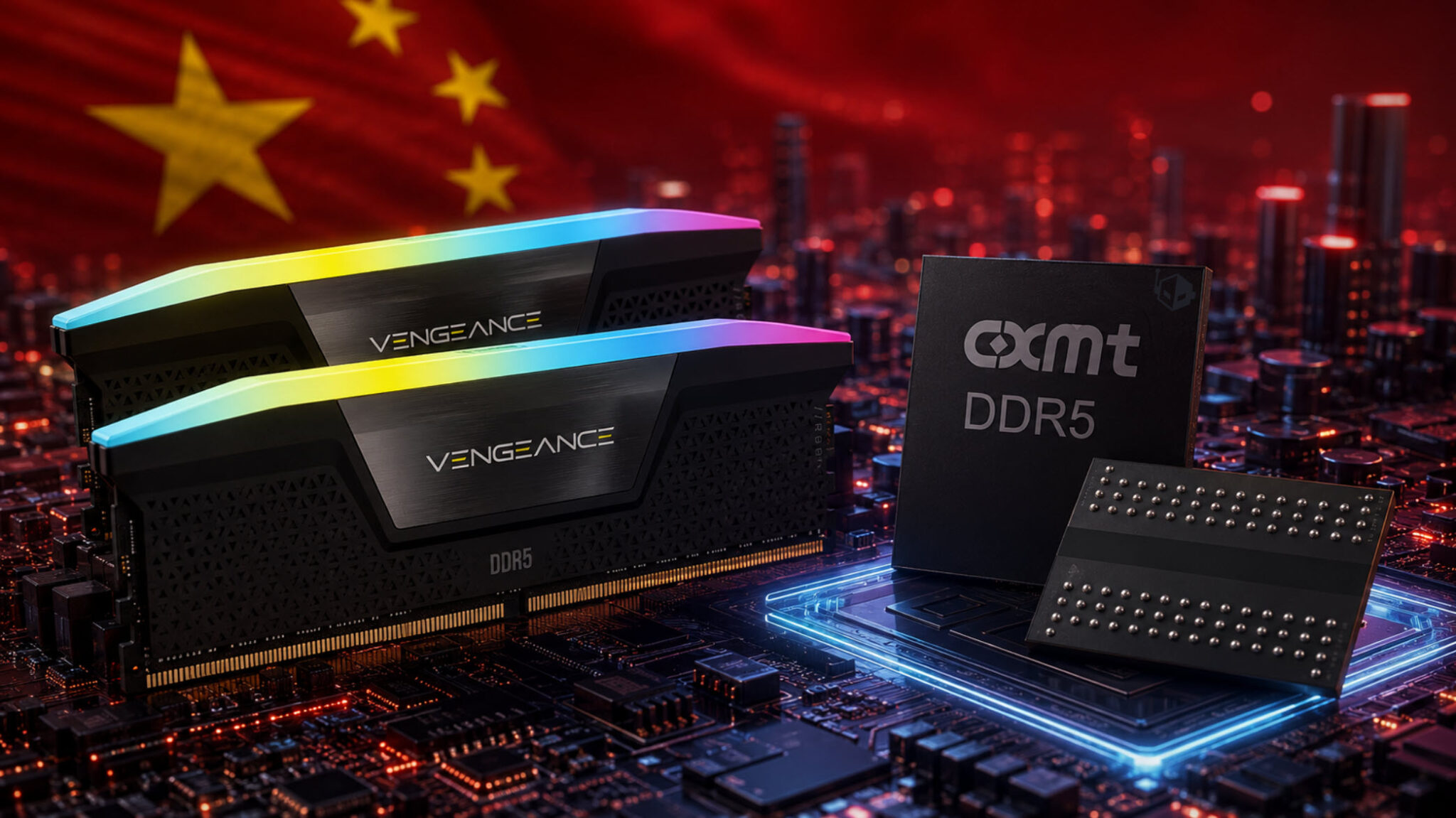
The global memory market, long dominated by three major manufacturers—Micron, Samsung, and SK Hynix—has undergone a seismic shift in recent months. The transformation began when Micron announced it would dedicate its production capacity exclusively to DRAM for data centers powering artificial intelligence applications. While this pivot toward an infinitely more lucrative market segment made business sense for Micron, it has caused consumer RAM prices to skyrocket to unprecedented levels, leaving PC builders, console manufacturers, and everyday consumers struggling with dramatically inflated costs.
The ripple effects of this market restructuring have been felt across the entire consumer electronics industry. The astronomical pricing has contributed to the eye-watering cost of products like Valve’s Steam Deck and the gradual price increases seen in gaming consoles such as the PlayStation 5 and Xbox Series X. For years, consumers had grown accustomed to relatively stable and declining memory prices, but the AI boom has fundamentally altered the economics of chip manufacturing, with profitability now heavily skewed toward enterprise applications rather than consumer products.
A New Chinese RAM Manufacturer Emerges at the Perfect Moment
Enter CXMT (ChangXin Memory Technologies), a Chinese company positioning itself as the fourth major player in the global RAM manufacturing sector. Virtually unknown outside China just a year ago, CXMT has suddenly become the most talked-about company in the tech industry. The firm recently made headlines with a spectacular stock market debut, with shares exploding by an astounding 466% on its first day of trading. Investors are betting heavily on the idea that CXMT will fill the vacuum left in the consumer RAM market as other industry giants chase AI-related profits.
The company’s rise has been nothing short of meteoric. By focusing exclusively on producing standard RAM memory—the type desperately needed by consumer electronics manufacturers—CXMT has carved out a highly profitable niche for itself. While the company’s initial growth was supported by Chinese government subsidies aimed at building domestic semiconductor capabilities, the sheer scale of demand has made the operation independently lucrative. Notably, CXMT has deliberately avoided the HBM (High Bandwidth Memory) market, which while more profitable per unit, is primarily used by data centers and AI infrastructure. This strategic decision to serve the underserved consumer market has attracted significant attention from international technology companies.
Major PC manufacturers are already taking notice and taking action. Industry giants including Dell, Acer, and HP are all reportedly considering partnerships with CXMT to alleviate their supply chain difficulties and combat escalating memory costs. Some companies have already made the leap—Lenovo, currently the world’s largest PC manufacturer, along with ASUS and gaming peripheral maker Corsair, are already incorporating CXMT memory modules into certain product lines. This adoption by major brands represents a significant vote of confidence in the Chinese manufacturer’s quality and reliability standards.
Is This the Miracle Solution the Market Has Been Waiting For?
Despite the enthusiasm surrounding CXMT’s emergence, industry analysts urge caution about viewing the company as a singular savior for consumer RAM prices. The question remains: can one Chinese manufacturer single-handedly rescue the consumer memory market from an exponential price spiral that experts don’t expect to subside until at least 2030? Unfortunately, it may be too early to make such optimistic predictions. At best, the emergence of a new major manufacturer should prevent the situation from deteriorating further, providing some measure of market stability.
However, consumers hoping for a return to pre-crisis pricing levels will likely be disappointed. Memory component prices are unlikely to fall back to their previous affordable ranges anytime soon. In fact, observers have noted with some dismay that CXMT has actually taken advantage of the supply shortage to charge prices even higher than its established competitors—hardly the behavior of a market savior motivated purely by filling consumer needs. The company appears to be maximizing profits during this period of intense demand, a rational business decision but one that tempers hopes for immediate price relief.
The meteoric rise of CXMT could nonetheless have longer-term positive effects on the RAM market by inspiring other companies to enter the consumer memory space. Seeing the colossal profits generated by the Chinese firm in such a short timeframe may motivate additional investment in this sector. However, building the sophisticated infrastructure required for semiconductor manufacturing is a years-long endeavor requiring billions in capital investment. The semiconductor industry has historically high barriers to entry, including the need for specialized equipment, clean room facilities, and highly trained technical personnel. For now, CXMT’s timely arrival on the consumer RAM scene appears to have at least stopped the bleeding, but patience will be required before the market truly stabilizes and returns to anything resembling normalcy.
Expert Opinion: The emergence of CXMT represents a structural shift in semiconductor geopolitics rather than a simple market correction. While the company won’t single-handedly restore pre-2023 pricing, its presence introduces meaningful competition that could cap future price increases. Long-term, we should expect the consumer RAM market to bifurcate permanently, with premium pricing becoming the new normal as AI demand continues to dominate manufacturing priorities through the end of the decade.