
French developer Asobo Studio has come remarkably far in just a few short years. While the Bordeaux-based team has been a fixture in the French gaming landscape for nearly twenty-five years, their trajectory shifted dramatically seven years ago with the release of the surprising hit A Plague Tale: Innocence, which found international acclaim and demonstrated the studio’s remarkable talent for crafting narrative-driven action-adventure experiences. That initial success proved to be merely the beginning of an impressive ascent, as Asobo reached new heights with A Plague Tale: Requiem in 2022, and now in 2026, they have delivered Resonance: A Plague Tale Legacy. Having completed this latest installment, one thing is abundantly clear: this is undoubtedly the finest production the studio has ever created.
A Bold New Direction for the Franchise
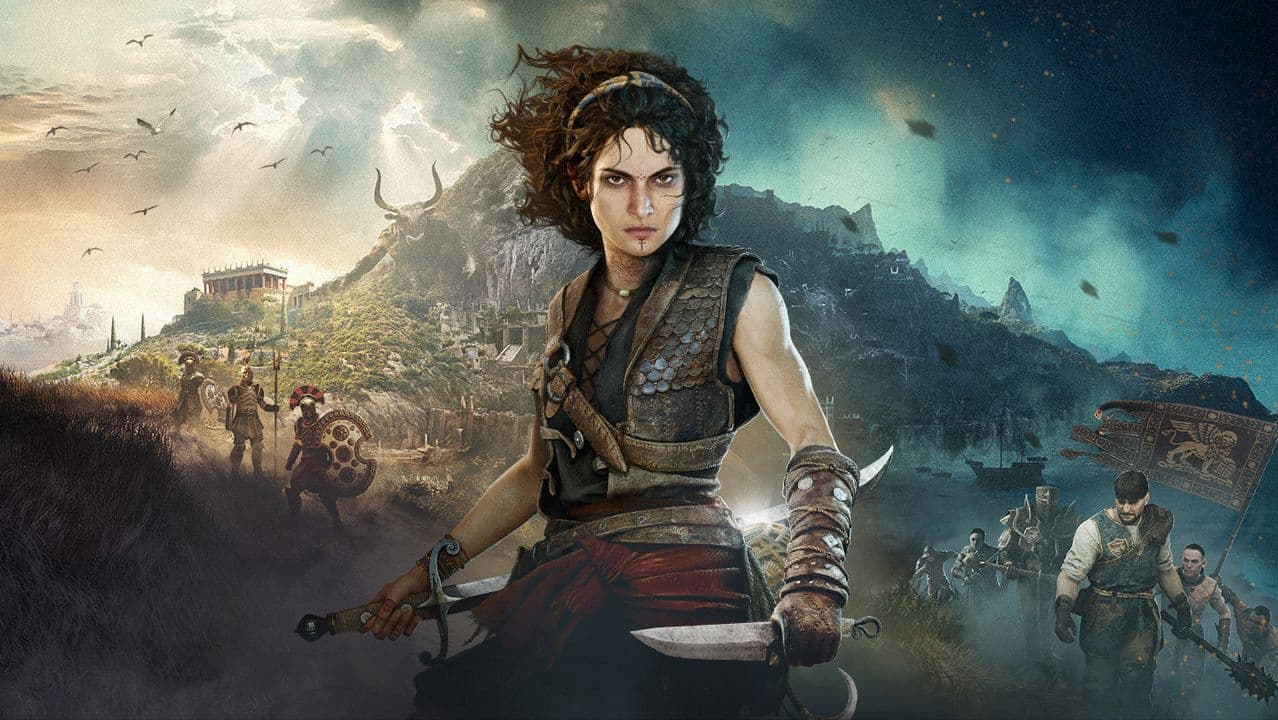
When the harrowing adventures of Amicia and Hugo reached their conclusion, a significant question loomed over both Asobo and their devoted fanbase: what comes next? While players remained in the dark about the franchise’s future direction, the development team in Bordeaux quickly found their answer: A Plague Tale needed to continue, but in a fundamentally different way. Four years later, we find ourselves at the doorstep of A Plague Tale Legacy, a prequel that introduces players to the character of Sophia, set fifteen years before the events of Requiem. By exploring the backstory of the charismatic pirate who captured players’ hearts in the previous installment, this new chapter takes us to the mysterious Isle of the Minotaur off the coast of Greece for a treasure hunt unlike any other.
The adventures of Sophia represent a significant departure from the experiences of Amicia and Hugo. While the mysteries surrounding the Macula remain present as an underlying thread throughout the narrative, it is Sophia’s personal story that takes center stage here. The heroine appears to share a particular connection with the legendary island and the mysterious treasure it supposedly harbors—a treasure that her band of raiders has long sought to claim without success. Determined to find answers to the affliction that plagues her and to put an end to the tragedies that have resulted from this treasure hunt, Sophia decides to take matters into her own hands, journeying to the island accompanied by her trusted friend Leni.
Adventure Gaming at Its Finest
From the opening hours, it becomes immediately apparent that Legacy represents a radical departure from the franchise’s first two entries. If Innocence and Requiem could be described as Asobo’s answer to The Last of Us, then A Plague Tale Legacy positions itself as the studio’s take on Uncharted, liberally sprinkled with Tomb Raider influences. The presentation, narrative structure, and gameplay all bear these clear inspirations, yet they are digested and reimagined with remarkable talent. Traversing the Isle of the Minotaur beneath a blazing sun proves to be an absolute delight, as players encounter one breathtaking visual after another—majestic environments that stand as vestiges of the ancient Minoan civilization. The effect of wind on sand and fabric, the masterful lighting, and the ambient sounds of cicadas and birdsong all serve to enhance the spectacular beauty on display.
However, A Plague Tale Legacy is fundamentally about balance. When players aren’t navigating their path using clues found in Sophia’s journal—accessible at any time—they’re solving cleverly designed puzzles while remaining vigilant against deadly traps. These dangers are genuinely lethal, and players should not expect the same forgiveness found in Naughty Dog’s titles. Here, the slightest error proves fatal. Rather than being a frustration, this approach reinforces the sensation of embarking on a grand adventure alongside Sophia, where each new discovery brings both wonder and exhilaration in the face of genuine peril.
Combat and Character Progression Reimagined
This sense of danger extends to encounters with military forces determined to claim the treasure first, representing the final major pillar of Legacy’s gameplay. The game dedicates considerably more attention to combat than its predecessors, but fear not—Asobo has struck the perfect balance between exploration, puzzles, and action across the roughly fifteen-hour adventure. Moreover, combat has received the most significant improvements since 2022. Gone is the somewhat clumsy approach of Requiem; instead, Sophia possesses genuine sword-fighting capabilities. Kicks, sword strikes, parries, and dodges combine to create visceral, dynamic confrontations that represent a genuine triumph of game design.
On the Hard difficulty setting, where two successive hits are enough to bring Sophia down, each encounter becomes genuinely threatening. Fortunately, the pirate heroine has numerous tools at her disposal. Beyond various swords that offer different advantages when discovered, Legacy introduces a grappling hook useful for both traversal and pulling enemies toward Sophia, as well as throwable objects that can stun opponents. The environments are also filled with collectibles to discover, including various charms that grant increasingly effective passive buffs as they accumulate—a clever system that rewards thorough exploration.
Streamlined Design Philosophy
More broadly, A Plague Tale Legacy adopts an extremely well-considered light-RPG approach that includes only the essential elements to avoid unnecessarily weighing down the experience. This manifests through the aforementioned charms, whose effects apply automatically, and a skill tree comprising just five abilities that slightly enrich combat using resonance points collected throughout the environment. In doing so, Asobo proves elegantly that less is often more when creating a complete and satisfying experience—one that avoids the trap of drowning in excessive side objectives and unnecessarily open zones. The studio knows exactly where it’s headed, maintains perfect pacing throughout, and this focus proves tremendously refreshing in an era of bloated open-world games.
Asobo Studio’s evolution mirrors a broader trend in the French gaming industry, which has produced increasingly ambitious and internationally successful titles in recent years. From studios like Quantic Dream to Don’t Nod, French developers have carved out a distinctive niche for themselves in the narrative adventure space. However, with Legacy, Asobo may have created the definitive French action-adventure title, one that stands shoulder to shoulder with the best offerings from larger international studios while maintaining its own unique identity and emotional depth.
The True Spirit of A Plague Tale
Reading all of this, one question may be lingering: however appealing this picture may be, where is the true spirit of A Plague Tale in all of this? Rest assured, it is present—and in abundance. True, the game’s first act primarily gives the impression that Asobo sought to distance itself from the franchise’s original essence to embrace influences from Uncharted and Tomb Raider. But this was clearly a calculated move to make the eventual return to what makes the series unique all the more impactful. Like a threatening cloud slowly approaching to obscure the warm sun caressing your skin, the legacy of the Macula gradually darkens Sophia’s journey, transforming her into the unwitting heroine of her own Greek tragedy.
The comforting, warm atmosphere of the early hours gives way to a relentless descent into darkness, where Sophia is battered, brutalized, and pushed to her physical and emotional limits at every turn as the adventure’s central thread unfolds. A Plague Tale Legacy may dispense with the swarms of rats that defined the franchise until now, but it replaces them with another danger that proves equally effective—one we won’t spoil here, preferring to let players experience it for themselves. Nonetheless, rest assured: if the emotional dimension of A Plague Tale was what attracted you most, you will feel right at home here, perhaps more than ever before.
Indeed, with this new opus, Asobo appears to have reached a new level in both their writing and direction. From Sophia to Theseus—a mysterious gladiator whom players control during certain visions—to the various characters orbiting around them, each possesses genuine depth and presence that makes them irresistibly compelling. Beyond the excellent French voice acting, A Plague Tale Legacy once again benefits from the incredible compositions of Olivier Derivière, whose music is so beautiful that players may find themselves setting down the controller simply to savor it a moment longer. The musical approach differs significantly from previous entries, yet it strikes just as powerfully. While minor issues exist—occasional clipping, slightly uneven facial animations depending on the character, and small framerate dips in certain areas in Quality mode on PS5—these represent minor concerns compared to the overall quality of Asobo’s latest production. Though its changed approach may initially disorient some players, anyone who loves adventure games will have no trouble answering the call of the Isle of the Minotaur.
Expert Opinion: Resonance: A Plague Tale Legacy represents a pivotal moment not just for Asobo Studio, but for the French gaming industry as a whole. By successfully pivoting from survival horror to action-adventure while maintaining their signature emotional storytelling, Asobo has demonstrated remarkable creative maturity. This title positions them as serious competitors to industry giants like Naughty Dog, and we can expect their influence on narrative-driven gaming to grow substantially in the coming years.