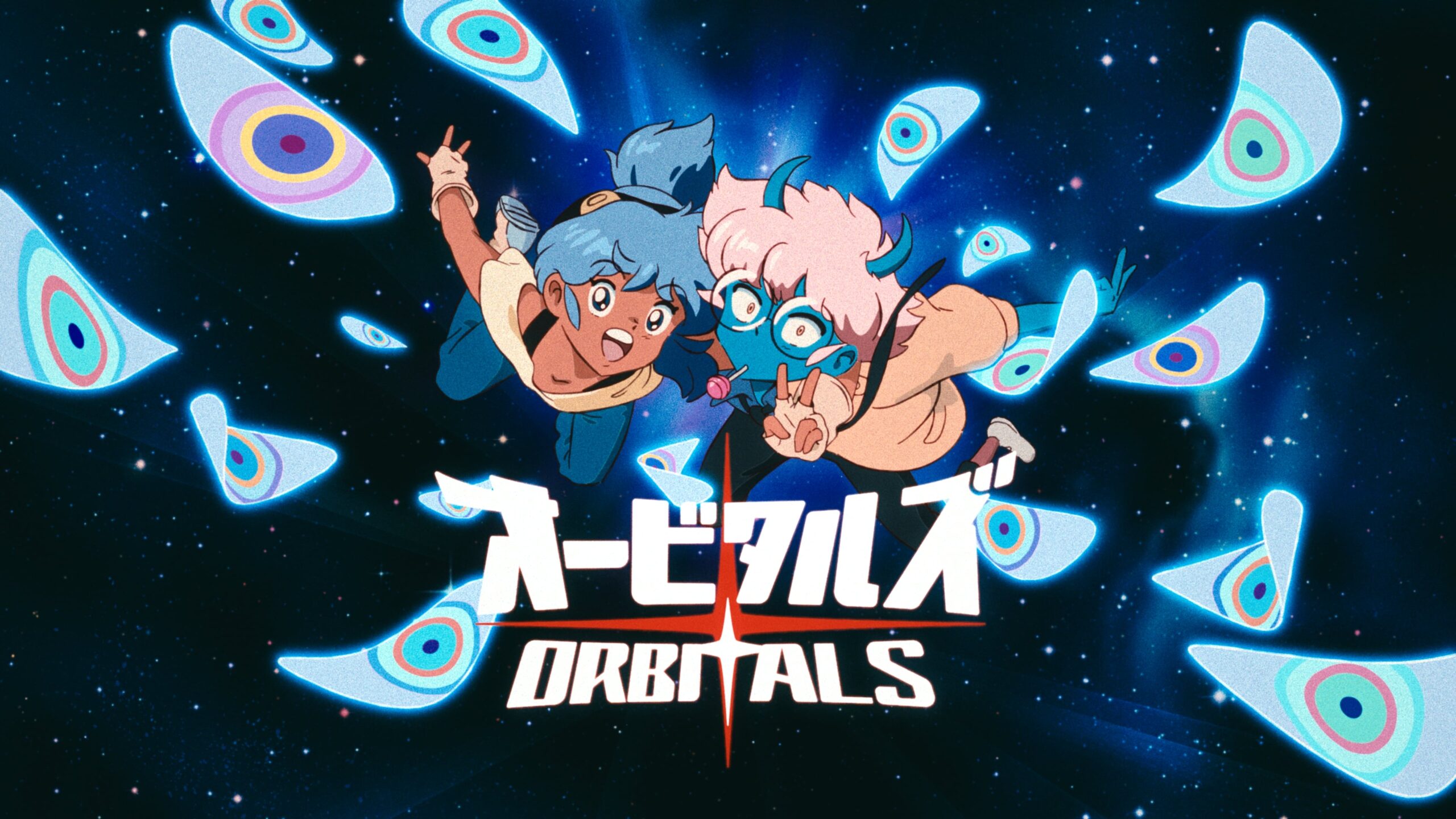
A new contender has emerged in the cooperative gaming space, and it’s turning heads with its distinctive blend of 1980s anime aesthetics and innovative co-op mechanics. Orbitals, developed by Japanese studio Shapefarm and published by Kepler Interactive, is set to launch exclusively on Nintendo Switch 2 on September 3, 2026. The game draws unmistakable visual inspiration from classic anime series like Dragon Ball and Ranma ½, while its cooperative gameplay philosophy echoes the critically acclaimed It Takes Two. In an exclusive interview, Creative Director Marcos Ramos and Game Director Jakob Lundgren revealed the passionate journey behind this ambitious project, discussing everything from their rejection of AI-generated content to their commitment to physical game releases.
From Support Studio to Original IP: Shapefarm’s Evolution
Shapefarm’s journey to creating Orbitals represents a significant transformation for the studio. For years, the team operated as a support studio, contributing to projects for other developers. Marcos Ramos, who joined the company eight years ago, describes this period as their “training arc” – a direct reference to anime storytelling that perfectly encapsulates the studio’s creative DNA. During this formative period, Shapefarm contributed to notable titles including Samurai Jack Battle Through Time and Naruto to Boruto: Shinobi Striker, projects that allowed them to refine their expertise in cel-shading techniques, stylization, and the challenging process of translating 2D graphics into three-dimensional gameplay experiences.
This background work proved invaluable when the time came to develop their first original intellectual property. Jakob Lundgren brought additional expertise to the table, having spent seven years at Hazelight Studios, the acclaimed Swedish developer behind A Way Out, It Takes Two, and Split Fiction. His extensive experience with cooperative game design provided the foundation for Orbitals’ gameplay philosophy. When Lundgren joined Shapefarm as the project was beginning to take shape, his proposition was straightforward yet ambitious: create a cooperative game that feels fresh and unique. The combination of Shapefarm’s visual expertise and Lundgren’s co-op design experience created the perfect conditions for Orbitals to flourish.
Authentic Passion Over Nostalgia: The 1980s Aesthetic Philosophy
In an era where nostalgia has become a marketable commodity, Shapefarm’s approach to Orbitals’ visual identity stands apart. Both developers were quick to clarify that their embrace of 1980s and 1990s anime aesthetics stems not from market research or trend-chasing, but from genuine personal passion. Lundgren emphasized that no market studies influenced the decision, while Ramos explained that the team’s inspiration comes from their own experiences watching Dragon Ball and Naruto during their formative years. The studio’s philosophy centers on capturing the magic of shared memories rather than exploiting nostalgia as a marketing tool.
This distinction between authentic passion and calculated nostalgia extends to the development process itself. Ramos revealed that team members would sometimes watch Dragon Ball episodes together, analyzing what made certain moments particularly impactful. The goal was never to create what Lundgren calls a “nostalgia trap” – projects that capitalize on sentimentality often fall into clichés. Instead, Shapefarm aimed to express their own unique style while evoking the feeling of discovering a lost anime gem from decades past. As Ramos playfully puts it, he likes to imagine Orbitals as “a genuine 1980s anime that you somehow missed at the time.”
Technical Innovation and Traditional Animation: A Collaborative Effort
Creating a cohesive visual experience that bridges 3D gameplay with traditional 2D animated cutscenes presented significant technical challenges. Shapefarm partnered with Massket, a Japanese animation studio, to produce Orbitals’ cinematics using traditional hand-drawn animation techniques. This collaboration required careful coordination to ensure both visual styles remained faithful to the game’s overall creative vision. Ramos explained that maintaining consistency meant establishing a shared set of rules while ensuring both teams converged at key points throughout development.
The iterative nature of game development created unique challenges for this partnership. While the gameplay evolved daily through constant refinement and testing, animated sequences required much longer production timelines. Lundgren recalled that the development team sometimes waited up to eighteen months before seeing completed 2D transitions between gameplay segments. The anticipation was palpable – he remembers the team essentially praying for positive results when deliveries finally arrived. This testament to the risks involved in ambitious creative endeavors also highlights the trust and dedication required from all parties involved in bringing Orbitals to life.
Rejecting AI: A Stance Aligned with Human Creativity
As debates surrounding generative AI intensify throughout the gaming industry, Shapefarm has taken a clear stance: Orbitals was developed entirely without AI-generated content. Both developers acknowledge that when production began, these technologies weren’t as prevalent or sophisticated as they are today. However, when the topic eventually arose during development, the team’s response was immediate and unanimous. Ramos, describing himself as an artist who constantly draws, expressed his desire to preserve the joy inherent in creative work. He views the collaborative conversations and shared creative processes as fundamental to Orbitals’ DNA – the very experience they want players to have.
Lundgren expanded on this philosophy by characterizing AI as essentially a “monologue” compared to the dialogue that defines collaborative human creativity. The passion that someone on the team felt for an idea, the enthusiasm that drove them to implement it in the game – these human elements create something tangible that players can feel when controller in hand. Both developers expressed uncertainty that AI could replicate this authentic creative energy. Their commitment to human-crafted content aligns with the game’s 1980s-inspired philosophy, representing an era when every frame was drawn by hand and every sound was performed by real artists.
Cooperative Philosophy and Nintendo Switch 2 Exclusivity
Drawing from his extensive experience at Hazelight, Lundgren articulated a clear philosophy for cooperative game design. Spontaneity and mutual engagement stand as foundational principles – neither player should ever feel sidelined while the other performs an action. Beyond mechanical design, the developers focused on creating situations that naturally encourage communication between players. Lundgren emphasized that what happens on the couch between players is almost as important as what happens on screen. This human connection drives the entire experience, transforming gameplay into a social activity rather than a solitary pursuit.
Lundgren openly acknowledges the comparisons to It Takes Two and Split Fiction as entirely justified, admitting he incorporated elements of their DNA into Orbitals’ design approach. However, he was equally determined to realize creative ambitions that weren’t possible in his previous work, ensuring Orbitals establishes its own identity rather than appearing as “an anime version of It Takes Two.” The Nintendo Switch 2 exclusivity decision was driven partly by the console’s Game Share feature, which allows players to share a single copy of the game for online co-op sessions. For a game built around cooperative experiences, requiring only one purchase regardless of local or online play felt essential. Lundgren confirmed there are no plans for other platforms – Orbitals remains a Switch 2 exclusive.
Physical Releases, Full Localization, and the Road Ahead
In an industry increasingly dominated by digital distribution, Shapefarm’s commitment to physical releases reflects their philosophical connection to the 1980s era they’re celebrating. Ramos noted that community requests for a physical version flooded in immediately following the game’s announcement. The decision felt appropriate given the game’s retro-inspired identity – as Lundgren pointed out, digital distribution simply didn’t exist in the 1980s. Following Sony’s recent announcement to discontinue physical game support on PlayStation consoles starting in 2028, Shapefarm’s choice resonates with players who value tangible game ownership. Lundgren, while not considering himself a collector, expressed that he will always choose physical copies when available, fondly recalling childhood memories of reading game manuals during car rides home from the store.
The studio’s commitment to accessibility extends to localization, with full voice dubbing in eight languages including French, featuring notable talent like Brigitte Lecordier, known for her work on Dragon Ball and Frieren. This investment reflects understanding of how crucial native-language dubbing is in cultures with strong anime traditions. Looking beyond the September launch, Ramos hinted at substantial ambitions for the Orbitals universe, noting that the game represents only a small portion of the story they’ve written. While dreams of sequels, spin-offs, or anime adaptations clearly exist, the immediate focus remains on delivering a successful launch – after which, as Ramos promised, the celebration begins.
Expert Opinion: Orbitals represents a fascinating case study in how indie developers can compete in the AAA space through authentic creative vision rather than massive budgets. The combination of Hazelight’s cooperative design expertise with traditional Japanese animation sensibilities creates a unique market position that larger studios would struggle to replicate. If Shapefarm successfully delivers on their vision, Orbitals could establish a new template for narrative-driven cooperative experiences that prioritize human creativity and cultural authenticity over technological shortcuts.